Dry Needling in San Francisco
Trigger-point dry needling from licensed acupuncturists who treat athletes every day, combined with acupuncture, cupping and sports massage when your injury needs more than one tool.
Rated 5.0 on GoogleLicensed acupuncturists
- Performed by
- California-licensed acupuncturists
- What it targets
- Trigger points in tight, painful muscle
- How it feels
- A quick pinch, then a deep ache or twitch
- Afterwards
- Mild soreness for a day or two is common
What our patients say
5.0 on Google from 92 reviews
I had a golfers elbow and my coach referred me to Andrew. He has been an amazing acupuncturist and worked on my right elbow, shoulder and arm for a couple of weeks. I have felt so much better just after the first session and going back really helps the blood flow so much better and my right arm, elbow and shoulder feels less tense and more relaxed. Definitely recommend this place, especially for athletes!
There’s no one I trust more than Andrew to support my kids in their healing process if they’ve had a sports-related injury. As elite athletes, it’s so important that their knees, ankles and shoulders are well taken care of, and Andrew is our go-to for treatment of pain or injury and also guidance for best practices outside the treatment room to further help healing along. My daughter recently rolled her ankle and was ready for a painfully prolonged healing process when we took her into to see Andrew for a couple treatments before a tournament weekend. With his help, her recovery was amazing, allowing her to feel confident on her ankle. Thanks to Andrew, she was healthy enough to play without pain or exacerbating the injury. We are very grateful to have Andrew on speed dial when these types of injuries occur!
Andrew introduced me to a form of healing which, after years of competitive long distance running and many injuries, I am more than thankful to have discovered! My latest injury, a small tear in my left hamstring, sidelined me for a number of months. After trying rest, physical therapy and anti-inflammatories with little results, I finally met Andrew. His approach from the very beginning was completely methodical, precise and extremely professional. Right away the pain eased, and I felt my body finally respond to treatment. Andrew was instrumental in healing my hamstring, and I trust that his acupuncture/massage techniques will keep me healthy and, importantly, keep me running for many decades and miles.
As a professional dancer, I rely heavily on Andrew throughout the performance season to literally fix me in order to get me back onstage. I have chronic problems with my knee and my shoulder, and the combination of acupuncture with electric stimulation and heat has been tremendously helpful. Andrew only needs five minutes to find exactly where he needs to work, and the results are fantastic. His acupuncture work is also gentle, and doesn’t leave me sore the next day — in fact, it’s one of the only therapies I feel comfortable receiving right before a show. Andrew does great deep tissue work as well, and he is very responsive and attentive as a therapist. I’d highly recommend him to dancers, athletes and non-dancers alike.
I could not recommend Andrew enough! He has so much knowledge on the human body and can figure out quickly what areas need work. I went in with major back pain that kept me from lifting weights or running, and after a few sessions I am pain free.
Gosh, I'm so happy I found Andrew! Thanks to him, I avoided going down a surgery route for my injury! In June 2022, my left knee started acting up (my best guess is overcompensation for gluteal tendonitis I was treating) but I pushed through to backpack 264 miles on the John Muir Trail. When I finished my trek, my left knee was pretty unhappy and I couldn't even get in and out of my car without feeling like a jigsaw puzzle. I tirelessly saw dozens of providers over the next year - chiropractors, physical therapists, orthopedists, massage therapists, etc. All had their own theories - soleus muscle, calf strain, chronic exertional compartment syndrome, etc. The complexity in my case was that my pain was not in my knee itself - it was on the left side in between my knee cap and calf. Despite my knee MRI showing meniscus tears, inflammation, tendonosis, etc. the doctors insisted we treat the symptoms, not the MRIs. So, I got a calf MRI, hip MRI, and an EMG, all of which were negative. Then, one doctor recommended oral Prednisone, and he told me I should see results better than Advil for pain management. It did nothing. It wasn't until I was finally referred to one doctor who noticed something in my knee MRI and caught that there is excess fluid in my proximal tibiofibular joint (PBTJ), and that area tracks with where I feel my pain. To test his suspicion diagnostically, he recommended an ultrasound-guided cortisone injection in my PBTJ to see if that reduced my pain. The pain did decrease (which was good), but it wasn't gone. The doctors informed me issues concerning the PBTJ are rare, and that they needed to refer me to one of the only specialists in the country for this. That specialist happened to be in Minnesota, and when I checked his website, he was only seeing patients for surgery. I did not want surgery. I felt completely defeated, unsure where to go next. In May, I was recommended by someone who also had a challenging journey with injuries (and was able to return to running and hiking) to try acupuncture. I was surprised, since I had not considered Eastern Medicine before for a sports injury. The person specifically recommended I search for an acupuncturist who specializes in athletes, and that led me to find "Acupuncture for Athletics." :) My first appointment with Andrew was May 30, and he patiently listened to my whole ordeal and reviewed all of the documentation I brought (MRIs, doctor's notes, etc). He assured me he treats the root cause, which I appreciated because I did not want to do a band-aid fix only for this to return again, and that he has hope I can feel better. We started off with cupping along my left leg to encourage the inflammation to dissipate, and then we did needles in my leg. Oof, I remember one session when Andrew placed a needle near my PBTJ - I screamed SO loudly lol. But once all of the needles were in, it slowly felt like a meditative experience, and I was able to relax into it. Over my 7 sessions with Andrew, I began to notice the needles felt less painful. In the beginning, I remember feeling the pain just in walking over to Andrew's office. By the 6th session, I realized I wasn't thinking about my pain anymore. I did one more session to be sure, and I was in disbelief that I actually felt pain-free! We decided to go a month testing how the pain fared without regular sessions, and so far so good! The pain flares here and there, but in a MUCH less capacity than before. Throughout this whole process, Andrew was kind, patient, and determined. He was committed to solving the underlying issue, and he was flexible and accommodating to me - whether I wanted to address my left knee or start tackling similar pain that was creeping up on my right knee. Had it not been for Andrew, I would have likely chased surgery because I was running out of ideas. I appreciate you, Andrew! If you're nearing your wits' end with a chronic injury, please go see Andrew and give it a good ~5 sessions if you can. Wishing everyone out there good luck on their chronic pain journeys! You got this!
I would strongly (strongly!) recommend Acupuncture for Athletics for both athletes and non-athletes alike. Not only does Andrew help with injury recovery, pain management, and stress relief, but he creates a relaxing and positive environment that enhances the work that he does and leads you to feel better both physically and mentally after each visit. And beyond acupuncture and massage, Andrew goes the extra mile to provide guidance on how to address specific pain-points and injuries, or to simply ensure that you are feeling and performing your best. Again, I can't recommend Acupuncture for Athletics enough!
Andrew applies his knowledge of the body and expert techniques to address affected muscles both for maintenance during training and related to injury. His combination of acupuncture and massage helps to open up areas and find the place to target. I have seen Andrew in the past for recovery post concussion and most recently for routine maintenance while training at a high level for my next marathon. I highly recommend Andrew and am lucky to have him as a part of my support team to stay healthy! - Katie Hynes, competitive runner -
As an avid runner who is always training for an endurance race my body has a tendency to break down. Andrew is a legit magician. He’s able to get to the root off the problem quickly and I often don’t miss a beat with regards to my training. Marathon prep would not be possible otherwise.
Andrew is the best. I’m a professional ballerina and his treatments helped me come back from a broken foot. When you see Andrew - you’re comforted by his knowledge, expertise, & strategy based treatment. Plus the clinic is so relaxing and warm. I have complete trust that he will help my aches and pains and keep me dancing for a long time.
Andrew is terrific. I saw him post shoulder surgery and it was very beneficial in getting pain free and full range of motion.
Andrew treated me over a period of about two years for hip and shoulder problems, and he was tremendously helpful. I was impressed with his knowledge and skill, not to mention wonderful “bedside manner” and especially his enthusiasm for staying current in his field.
One of the most direct ways to release a muscle that won't let go.
The calf that seizes on every run. The upper trap that has turned into a headache by Thursday. The glute that stopped firing, so your hip won't open at the bottom of a squat. These are the problems we work on with dry needling almost every day at our Cow Hollow clinic.
At Acupuncture for Athletics, dry needling is performed by California-licensed acupuncturists who specialize in sports injuries. It's never a one-technique visit. We assess how you move, needle the trigger points that are actually driving the problem, and add sports acupuncture, cupping, cold laser or sports massage when that gets you a better result.
Why Work with Us
We're not just for athletes, but for everyone wanting more movement and less pain in their life.
Built around your life
We start with how you move, then treat the injury with a plan to get you back to training, work and everyday life.
Excellence in one visit
Acupuncture, dry needling, cupping, cold laser and sports massage from the same licensed team, so you're not bouncing between clinics.

Trusted by professionals
Andrew and team have treated athletes for USF, the San Francisco Ballet, LINES Ballet and MLB spring training. Our patients rate us 5.0 on Google.
What is dry needling?
A trigger point is a tight, irritable band inside a muscle. It's the spot that makes you wince when you press it, and it often sends pain somewhere else: a knot in your glute can show up as pain down the back of your leg, and a knot in your neck can become a headache behind your eye.
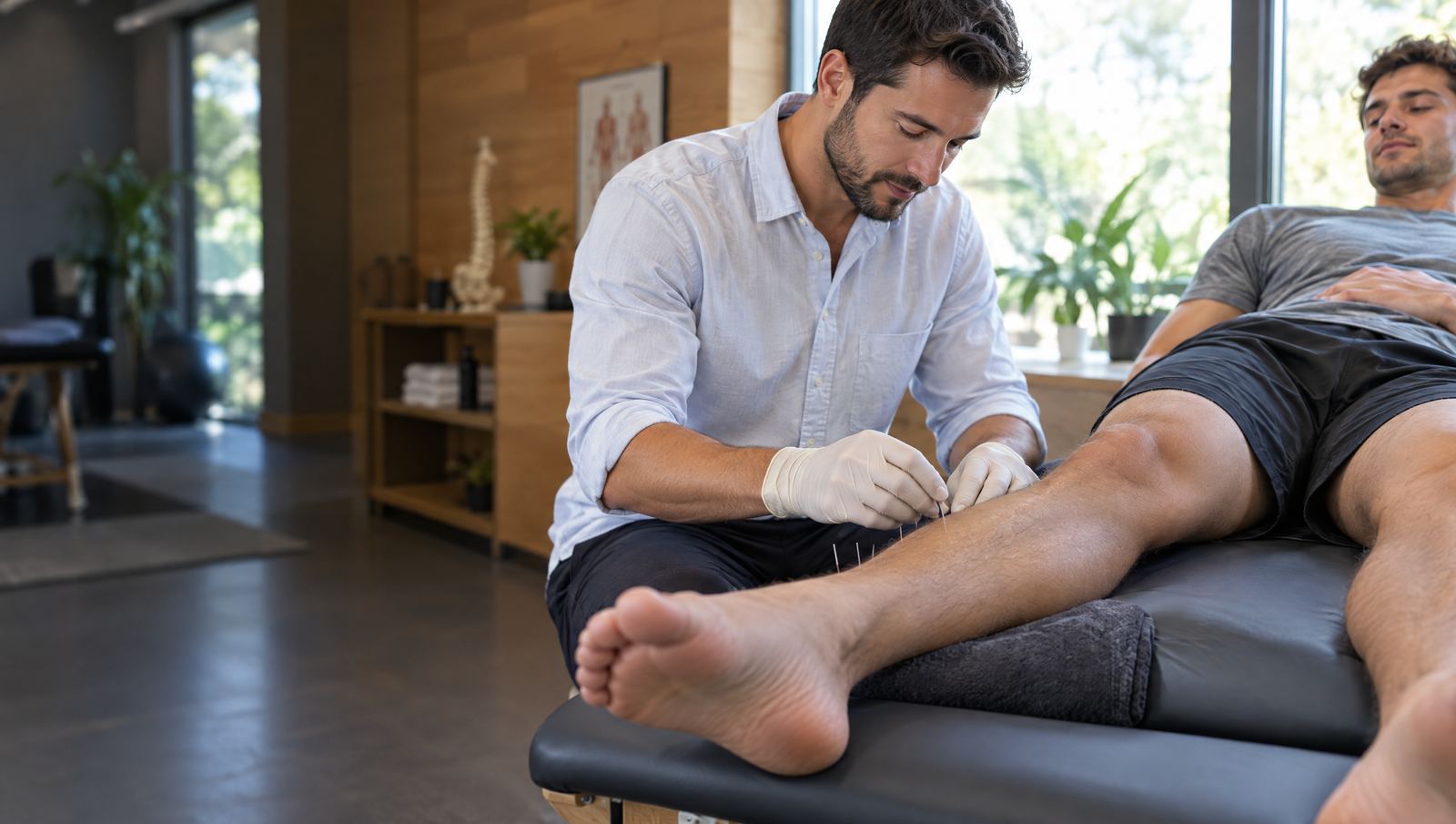
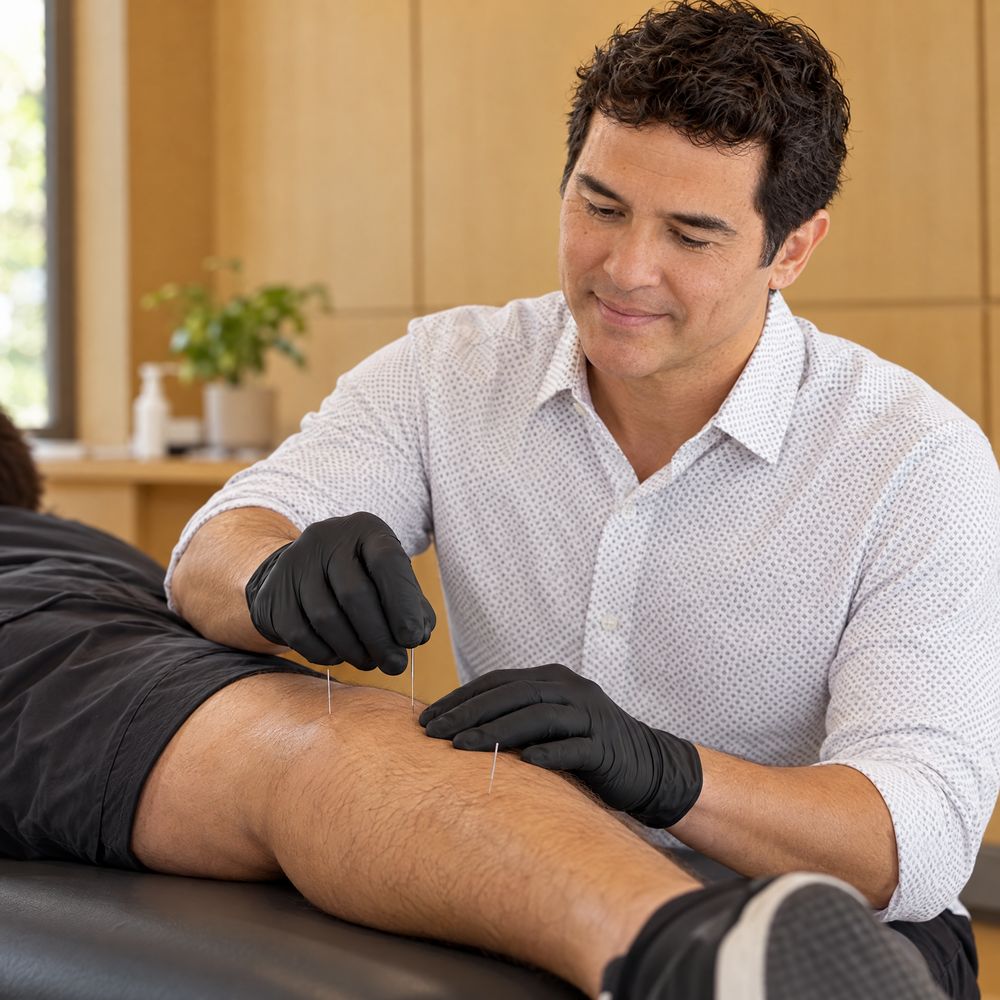
Dry needling places a thin, solid, sterile needle directly into that band. Nothing is injected, which is where the word "dry" comes from. When the needle reaches the right spot the muscle often gives a brief twitch, and that's usually the moment it starts to let go.
Cleveland Clinic explains that an overworked muscle can end up short of blood supply, which irritates the nerves around it, and that needling helps bring normal blood flow back and prompts the release of the body's own pain-relieving chemicals. The goal is simple: calm the trigger point, restore the muscle's normal length and get you training again.
Dry needling vs acupuncture
Same fine, single-use needles. What differs is the map we're reading. Because we're licensed acupuncturists, we can use both and choose what your injury needs, often in the same session.
| Compared on | Dry needling | Acupuncture |
|---|---|---|
| Target | Myofascial trigger points in muscle | Acupuncture points and channels, including tender local points |
| Framework | A Western anatomical model of muscle and nerve | Traditional Chinese medicine, with a whole-body assessment |
| Who performs it in California | Licensed acupuncturists (L.Ac) | Licensed acupuncturists (L.Ac) |
| How it feels | A deeper ache or a brief muscle twitch | Usually a dull ache or heaviness, often relaxing |
| Typical use at our clinic | Releasing a specific tight band for a quick change in range of motion | Pain, swelling, recovery and the wider picture around an injury |
Who performs dry needling in California?
In California, dry needling is performed by licensed acupuncturists. Physical therapists in California are not currently authorized to perform dry needling.
So if a coach, doctor or physical therapist has told you to "get dry needling," or you had it in another state and want to keep going, a licensed acupuncturist is who provides it here. All three of our practitioners are California-licensed acupuncturists, and California licensure requires at least 3,000 hours of theoretical and clinical training before the state exam.
Who it's for
Dry needling helps most when the core problem is muscular: a muscle that stays tight no matter how much you stretch, roll or rest it. We see athletes of every level, and plenty of people whose main sport is a long day at a desk.
Athletes we see most
Training for a race? Our acupuncture for runners page covers the calf, hamstring and knee problems we treat most in the build-up.
Commonly used for
- Calf, hamstring and quad tightness or strains
- IT band irritation and runner's knee
- Plantar fasciitis and heel pain
- Glute, piriformis and sciatic-type pain
- Low back muscle spasm
- Neck, upper trap and tension headaches
- Rotator cuff and shoulder pain
- Shin splints and jaw tension
What the research says
Research suggests dry needling may help ease muscle pain. A 2017 review of 13 trials found dry needling may reduce musculoskeletal pain more than sham needling or no treatment over the first 12 weeks.
For neck pain linked to trigger points, a 2020 review of 28 trials found it reduced pain and pain-related disability in the short term.
Sports medicine authors have also described using dry needling around competition to manage pain and swelling and to help range of motion and power. That matches what we see: it's a strong tool, and results vary from person to person.
What dry needling won't do on its own
- Fix a training load that has jumped too fast
- Replace the strength work that keeps a muscle from tightening again
- Treat a tear, fracture or nerve problem that needs a physician
That's why we pair it with cupping therapy for tight fascia, hands-on sports massage and simple advice on what to change in your training.
Your first dry needling session
What happens, what it feels like, and how it fits around your training.
Assessment
We take your history, watch the movement that hurts and press along the muscle to find the trigger points behind it. Needling the sore spot is easy. Finding the muscle that's causing it is the skill.
The needling
You may feel a quick pinch, then a deep ache or a brief twitch as the muscle responds. Most athletes call it intense but very tolerable, followed by a clear sense of release.
Afterwards
Soreness for a day or two is common, a lot like the day after a hard session, and a small bruise is possible. Drink water and keep moving gently. Most people train the next day.
Your plan
How many sessions you need varies. We'll estimate it after your assessment and recheck as you improve, rather than selling you a fixed package.
Is dry needling safe?
In trained hands with sterile, single-use needles, it's generally considered safe. In one study of 7,629 dry needling treatments, about one in five led to a mild, short-lived effect such as bruising, minor bleeding or soreness, and no significant adverse events were reported. Serious problems are very rare. The one practitioners take most care to avoid is a punctured lung when needling over the chest wall, which is why depth and angle matter there.
Dry needling isn't right for everyone. Tell us before your session if you're pregnant, take blood thinners or have a bleeding disorder, have a weakened immune system, have had recent surgery, or feel very anxious about needles. We'll adjust the treatment or choose a different technique.
Who'll treat you
Three California-licensed acupuncturists who work with athletes every day. Clinic owner Andrew Castellanos has more than 25 years of experience, including USF athletics, the San Francisco Ballet and MLB spring training. Because we're also trained in Traditional Chinese Medicine, dry needling can sit alongside acupuncture in the same visit.

Andrew Castellanos
L.Ac, CST · Clinic owner
Trigger-point dry needling for tight, overworked muscles.
- Dry needling, cupping and sports massage in one plan
- Targets motor points with acupuncture
- Ballet, college and MLB athletes
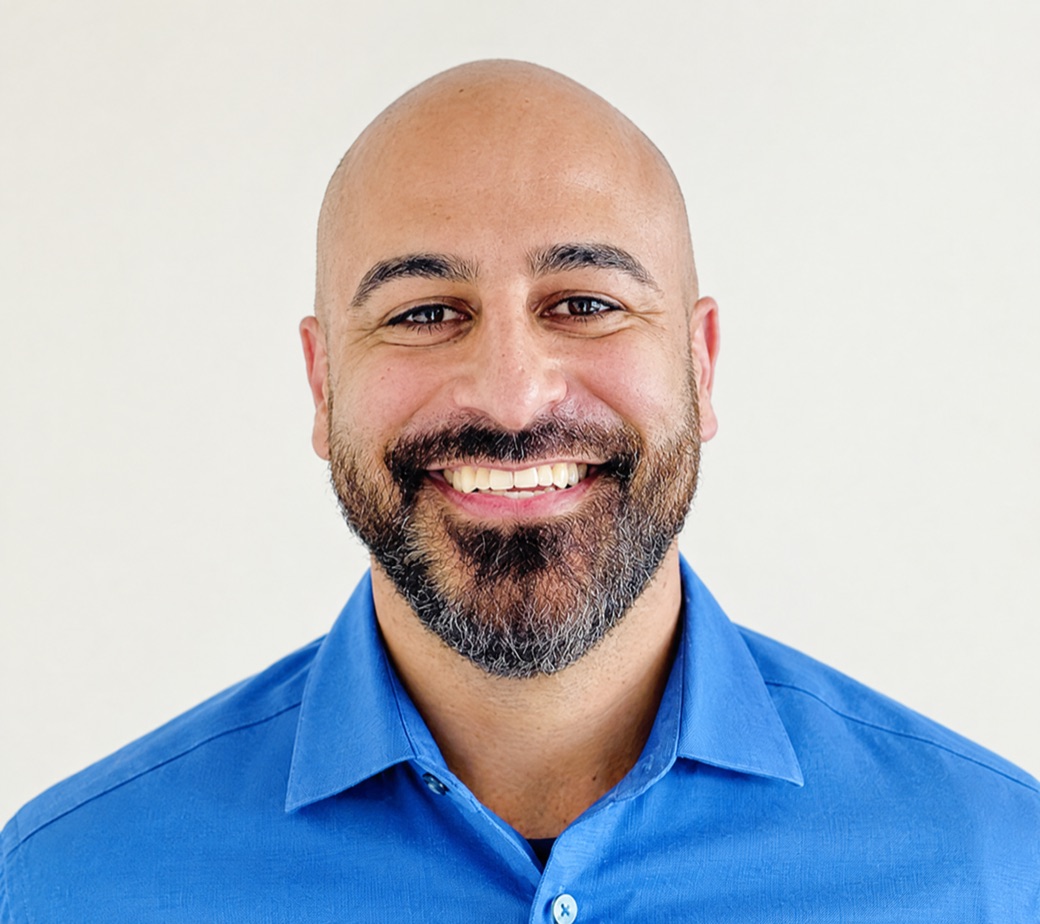
Ali Hakimi
L.Ac
Local acupuncture and cupping for muscle pain and injury recovery.
- Local acupuncture for injury recovery and pain reduction
- Diet and lifestyle advice aimed at performance
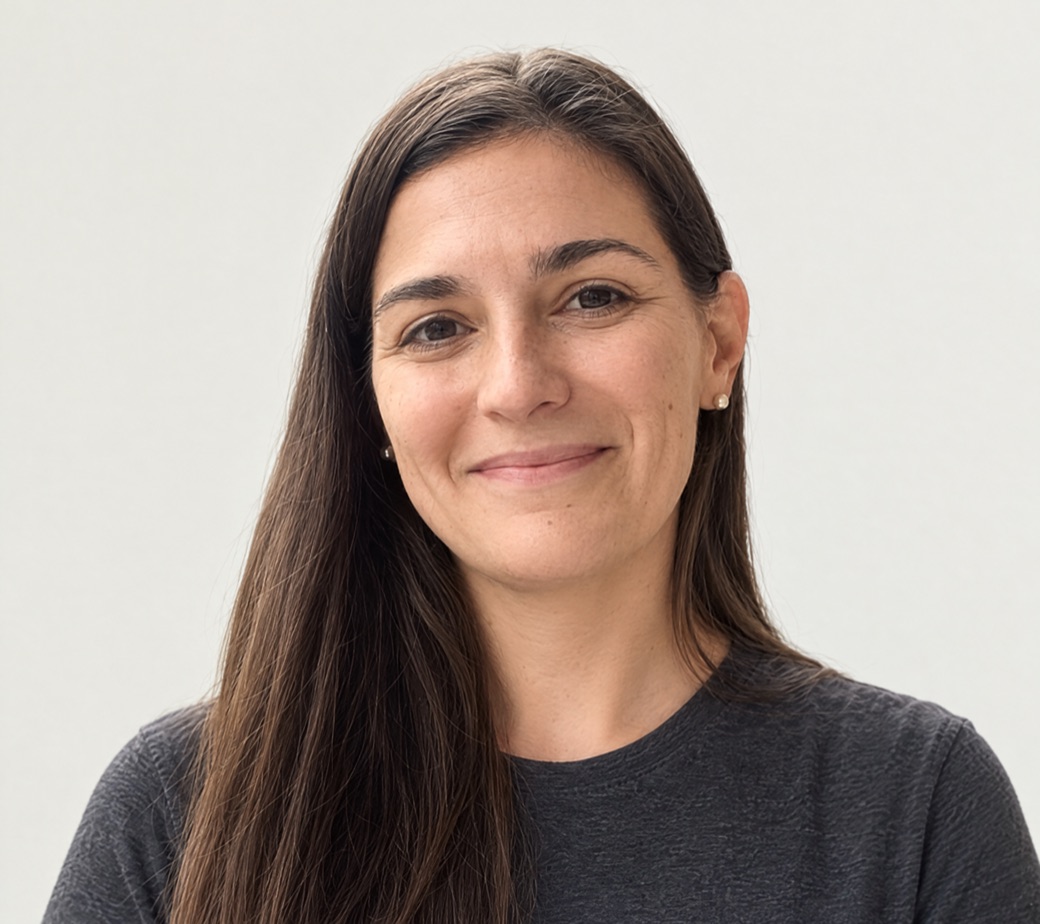
Suzanne Lange
DACM, L.Ac, CMT
Trigger point and myofascial work from 20+ years of hands-on practice.
- Trained in myofascial and trigger point therapy
- Whitfield Reaves Sports Medicine Apprenticeship
- Advanced study in Japanese-style acupuncture
Pricing and booking
Dry needling is part of your acupuncture appointment. Your practitioner decides during the visit whether it suits your injury, and often combines it with other treatments in the same session.
We don't bill insurance, but we'll give you a superbill to submit for possible out-of-network reimbursement. We accept HSA and FSA cards and all credit cards, and gift certificates are available.
We're at 2920 Webster Street, an easy walk from the Marina, Pacific Heights and the Presidio. See our page on acupuncture in Cow Hollow for parking and transit, or browse all of our services.
Appointments
- 60-min initial acupuncture & assessment
- $225
- 45-min acupuncture follow-up
- $195
- 60-min acupuncture/massage combo
- $225
- 75-min acupuncture/massage combo
- $265
- 90-min acupuncture/massage combo
- $300
Dry needling FAQ
Is dry needling the same as acupuncture?
They use the same fine, single-use needles but come from different frameworks. Dry needling targets myofascial trigger points using a Western anatomical model, while acupuncture works with points and channels and a broader assessment of the whole body. In California both are performed by licensed acupuncturists, and we often combine them in one session.
What are the benefits of dry needling?
Dry needling can ease trigger-point pain, release tight, knotted muscle and improve range of motion, so you can move and train more comfortably. Research is most supportive for short-term relief of muscle pain, such as in the neck, shoulders and low back, and many athletes use it to loosen a stubborn muscle before a race or a heavy training block. Results vary from person to person, and we'll tell you honestly whether it suits your injury.
Who can do dry needling in San Francisco?
In California, dry needling is performed by licensed acupuncturists. Physical therapists in California are not currently authorized to perform dry needling, so a licensed acupuncturist is who provides it here. All three of our practitioners are California-licensed acupuncturists.
Does dry needling hurt?
You may feel a quick pinch, then a deep ache or a brief muscle twitch at the trigger point, which usually fades within seconds. Most athletes describe it as intense but tolerable, followed by a feeling of release.
Will I be sore afterwards, and can I train?
Mild soreness for a day or two is common, similar to a hard workout, and a small bruise is possible. Light movement and water help. Most people train normally the next day, and we'll tell you if your injury needs longer.
How many dry needling sessions will I need?
It varies with the injury and how long you've had it. Some people notice a change after the first visit, while long-standing problems usually take longer. We'll give you an estimate after your assessment rather than a fixed package.
What conditions is dry needling used for?
It's commonly used for muscle tightness and trigger-point pain in the calves, hamstrings, glutes, low back, neck, upper traps, shoulders and forearms, and for problems such as tennis elbow, plantar fasciitis and tension headaches. It may help reduce pain and improve range of motion as part of a broader plan.
Is dry needling safe?
When performed by a licensed, trained practitioner with sterile single-use needles, dry needling is generally considered safe. Soreness and minor bruising are the most common side effects, and serious complications are very rare. We screen every patient first and take extra care over the chest wall.
What are the side effects of dry needling?
The most common are mild soreness for a day or two, a small bruise where a needle went in, and feeling a little tired afterwards. In a study of 7,629 dry needling treatments, about one in five led to a mild, short-lived effect like these, and no significant adverse events were reported. Serious problems are very rare. We screen every patient first and take extra care when needling over the chest wall.
Can dry needling help performance, not just pain?
Some sports medicine authors describe using dry needling around competition to manage pain and improve range of motion. In practice, many athletes like a session in the week before a race or performance when a tight muscle is holding them back.
Do I need a referral?
No. You can book directly with us. If your assessment suggests something that needs imaging or a physician, we'll tell you and refer you.
How much does dry needling cost in San Francisco?
Dry needling is part of an acupuncture appointment, so there's no separate fee. A 60-minute initial assessment and treatment is $225, and a 45-minute follow-up is $195. We accept HSA and FSA cards, and we provide a superbill you can submit for possible out-of-network reimbursement.
Do you take insurance?
We don't bill insurance directly. We'll give you a superbill you can submit to your insurer for possible out-of-network reimbursement, and we accept HSA and FSA cards and all credit cards.
Where can I get dry needling in San Francisco?
Clinic owner Andrew Castellanos, L.Ac, leads our dry needling at 2920 Webster Street, in Cow Hollow near the Marina. In California, dry needling is performed by licensed acupuncturists, and every practitioner on our team is one. We often combine it with acupuncture, cupping or sports massage when your injury needs more than one tool.
Can I book dry needling before or after work?
Andrew's appointments start at 9am and run until 7pm on Mondays, Tuesdays and Thursdays. He also works Wednesday until 3:30pm and Friday until 5pm. If you plan to train the same day, ask us about timing when you book.
References
- Cleveland Clinic. Dry Needling: What It Is, Benefits & Side Effects.
- Gattie E, Cleland JA, Snodgrass S. The Effectiveness of Trigger Point Dry Needling for Musculoskeletal Conditions by Physical Therapists: A Systematic Review and Meta-analysis. J Orthop Sports Phys Ther. 2017.
- Navarro-Santana MJ, et al. Effectiveness of Dry Needling for Myofascial Trigger Points Associated with Neck Pain Symptoms: An Updated Systematic Review and Meta-Analysis. J Clin Med. 2020.
- Gregory TJ, Rauchwarter SA, Feldman MD. Clinical Commentary: Rehabilitation Using Acute Dry Needling for Injured Athletes Returning to Sport and Improving Performance. Arthrosc Sports Med Rehabil. 2022.
- Brady S, McEvoy J, Dommerholt J, Doody C. Adverse events following trigger point dry needling: a prospective survey of chartered physiotherapists. J Man Manip Ther. 2014.
- California Acupuncture Board. Examination Requirements.
Release what's holding your training back
Book dry needling at our Cow Hollow clinic, or call us with questions first.
Visit us in Cow Hollow
2920 Webster Street, between Union and Filbert. A short walk from the Marina, Pacific Heights and the Presidio.
Address
Acupuncture for Athletics2920 Webster Street
San Francisco, CA 94123 Gate code: in your booking confirmation email
Hours
- Every day
- 7:30am – 9:00pm